
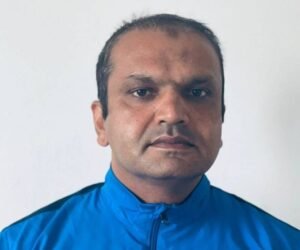
Pakistan cricket issues and Solutions, revealed by Muhammad Yasir

Pakistan’s Cricket Problem Is Structural, Not Talent-Based.
Pakistan has never suffered from a shortage of cricketing talent. For decades, the country has produced naturally gifted fast bowlers, instinctive stroke-makers and match-winners capable of brilliance on any stage. Yet inconsistency continues to define its international performances.
The issue is not talent. It is structure.
Whenever the national side falters, attention turns to coaching changes. The appointment of foreign coaches is often presented as a solution. While international expertise can enhance tactical awareness and professionalism, it does little to address the deeper structural concerns embedded within domestic cricket.
The national team sits at the top of a pyramid. If the base is unstable, the peak cannot remain secure.
Under the administration of the Pakistan Cricket Board (PCB), domestic structures have frequently been altered. Tournament formats have changed, regional systems have been reshaped, and continuity has been limited. Such instability prevents the development of a coherent long-term pathway for players.
By contrast, India’s rise has been systematic. The Board of Control for Cricket in India (BCCI) invested not only in its international squad but in strengthening the domestic framework. Competitions such as the Ranji Trophy and the Indian Premier League operate within performance ecosystems supported by sports science, analytics, and structured development models.
The difference is not simply work ethic. It is preparation backed by infrastructure.
Modern cricket demands far more than technical skill. It requires biomechanical assessment, workload monitoring, periodized strength and conditioning, and evidence-based injury prevention. Fast bowling alone subjects the body to extreme ground reaction forces, lumbar stress and rotational torque. Without structured physical preparation, breakdown becomes inevitable.
In Pakistan’s domestic environment, sports science integration remains inconsistent. Strength and conditioning standards vary widely. Coaching education lacks uniformity. Increasingly, training methods are influenced by trends rather than applied physiology and biomechanics.
Training hard is not the same as training intelligently.
The consequences are predictable. Talented players emerge rapidly but struggle to sustain peak performance. Recurrent injuries, workload mismanagement and inadequate recovery protocols shorten careers that might otherwise flourish.
Meanwhile, systems built on scientific foundations produce athletes who are not only skilled but physically resilient and strategically developed.
Appointing foreign coaches at national level may provide short-term gains. However, without reform at domestic and grassroots levels, such measures are cosmetic. Sustainable success requires structural accountability.
Meaningful reform would include:
• Standardized coaching certification across domestic cricket
• Dedicated sports science units at regional levels
• Mandatory biomechanical screening for fast bowlers
• Systematic workload monitoring
• Long-term athlete development models beginning at youth level
Pakistan’s cricketing culture is rich in passion and potential. But passion alone does not guarantee progress. Consistency emerges from systems that nurture, monitor and refine talent over time.
The contrast between Pakistan and India is not a contrast between talented players and hardworking ones. It is a contrast between talent supported by structure and talent left to navigate uncertainty.
If Pakistan aspires to sustained excellence rather than sporadic brilliance, reform must begin at the foundation. Replacing coaches at the summit cannot compensate for cracks at the base.
Until domestic cricket is strengthened through continuity, scientific integration and long-term planning, the cycle of promise and disappointment is likely to continue.
The solution lies not in searching abroad for quick fixes, but in building a system at home that allows talent to mature, endure and consistently succeed.